
Cybersecurity Compliance Explained: Which Regulations Apply to Your Business?
Cybersecurity compliance is one of those topics many businesses know they should understand—but often put off because it feels confusing, technical, or overwhelming. Between constant news about data breaches and the growing list of regulations, it’s hard to know what actually applies to your business and what doesn’t.
The truth is, cybersecurity compliance isn’t just for large corporations or tech giants. If your business handles customer data in any form—and most do—there are rules you need to be aware of. The challenge is figuring out which ones matter to you and how to approach them without overcomplicating things.
This guide breaks cybersecurity compliance down in plain language. No legal jargon. No unnecessary complexity. Just what you need to know to understand your responsibilities and reduce risk.
What Cybersecurity Compliance Really Means
At its core, cybersecurity compliance means following rules designed to protect data. These rules come from laws, regulations, and industry standards, and they outline how businesses should collect, store, and secure sensitive information.
One important thing to clear up early: compliance and security are not the same thing.
Compliance is about meeting minimum requirements. Security is about genuinely protecting your systems and data. You can technically be compliant and still vulnerable—but if you’re not compliant, you’re almost certainly exposed to higher risk.
Why compliance matters goes beyond avoiding fines:
- Data breaches are expensive and disruptive
- Customers lose trust quickly after security incidents
- Many contracts now require proof of compliance
- Regulators are paying closer attention than ever
For most businesses, compliance isn’t optional anymore—it’s part of doing business responsibly.
Why There’s No One-Size-Fits-All Rule
A common misconception is that there’s a single cybersecurity law that applies to everyone. In reality, compliance depends on a few key factors.
Industry
Some industries are more regulated than others. Healthcare, finance, and payment processing face stricter rules because the data they handle is especially sensitive.
Location
Cybersecurity and privacy laws often apply based on where your customers live—not where your company is based. This surprises many business owners.
Type of Data
The more sensitive the data, the more rules apply. Personal information, health records, and payment details all come with higher expectations for protection.
Once you understand these factors, it becomes much easier to see which regulations are relevant to your business.
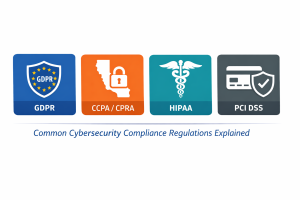
The Most Common Cybersecurity Regulations (Explained Simply)
Let’s look at the regulations businesses encounter most often, without the legal language.
GDPR: If You Deal With EU Customers, This Matters
The General Data Protection Regulation (GDPR) applies to any business that collects or processes personal data from people in the European Union. It doesn’t matter if your company is located outside the EU—GDPR can still apply.
At a high level, GDPR requires businesses to:
- Be transparent about how they use personal data
- Only collect data they actually need
- Protect that data with appropriate security measures
- Notify authorities and users if a serious data breach occurs
- Respect individuals’ rights over their own data
GDPR is known for strict enforcement and significant fines, which is why even small businesses should take it seriously if they have EU users or customers.
CCPA and CPRA: California’s Data Privacy Rules
If your business collects personal data from California residents, you may be subject to the California Consumer Privacy Act (CCPA) and its expanded version, the CPRA.
These laws give consumers more control over their data, including the right to:
- Know what data is being collected
- Request deletion of their data
- Opt out of certain types of data sharing
What makes California’s laws especially important is their influence. Many experts see them as a preview of where U.S. data privacy laws are headed.
HIPAA: Healthcare Data Comes With Higher Stakes
HIPAA applies to healthcare providers, insurers, and any business that handles protected health information. This includes vendors and service providers, not just hospitals and clinics.
HIPAA focuses on three main areas:
- Administrative safeguards (policies, training, oversight)
- Technical safeguards (access controls, encryption, monitoring)
- Physical safeguards (secure facilities and devices)
Healthcare data is extremely valuable to attackers, which is why HIPAA compliance is taken so seriously—and enforced regularly.
PCI DSS: If You Accept Card Payments, Pay Attention
PCI DSS applies to any business that processes credit or debit card payments, regardless of size.
The goal is simple: reduce the risk of payment card data being stolen. This involves things like:
- Securing payment systems and networks
- Limiting access to cardholder data
- Regularly testing for vulnerabilities
Failure to comply can lead to fines, higher transaction fees, or even losing the ability to accept card payments.
Other Frameworks You’ll Hear About
Not all standards are laws, but many are still important:
- SOC 2 is often expected for SaaS and tech companies
- ISO 27001 is a globally recognized security standard
- NIST Cybersecurity Framework is widely used as a best-practice model
- GLBA applies to financial institutions
- SOX affects public companies and financial reporting
Even when these aren’t legally required, customers or partners may expect them as proof you take security seriously.
How to Figure Out What Applies to Your Business
Feeling unsure is completely normal—and you’re not alone. A simple self-check can make things much clearer. Start by thinking about the kind of data you collect, where your customers are located, and whether you handle sensitive information like health details, payment data, or personal identifiers. It’s also important to consider which vendors or third parties have access to your systems or data.
Many small businesses assume they’re exempt from compliance requirements simply because of their size. In reality, it’s the type of data you handle—not how big your company is—that usually determines what obligations apply to you.
Common Challenges Businesses Run Into
Even businesses that understand the rules often struggle with execution.
- Multiple regulations applying at once
- Limited in-house expertise
- Keeping up with changing laws
- Tight budgets and limited time
Building a Practical, Scalable Compliance Approach
Cybersecurity compliance doesn’t have to be a massive, one-time project. The most effective approach is ongoing and risk-focused.
That usually means:
- Prioritizing real risks instead of just checking boxes
- Making sure policies, tools, and training align
- Keeping clear documentation for audits or reviews
- Using automation or external experts where it makes sense
When compliance becomes part of everyday operations, it stops feeling overwhelming and starts delivering real value
Conclusion
Cybersecurity compliance isn’t just about avoiding fines or passing audits. It’s about trust. Customers want to know their data is safe. Partners want reassurance you won’t be the weak link. Regulators want proof you’re taking responsibility seriously.
Understanding which regulations apply to your business is the first step. Taking action is the next.
If you need expert compliance support, Agency1987 helps businesses turn cybersecurity compliance into a long-term strength through practical, risk-focused guidance.
FAQs
1. Do small businesses need to follow cybersecurity compliance rules?
Yes. Many cybersecurity and data protection regulations apply based on the type of data you handle, not the size of your business. If you collect personal, payment, or health data, compliance requirements likely apply.
2. How do I know which cybersecurity regulations apply to my business?
Start by looking at three things: the type of data you collect, where your customers are located, and your industry. These factors determine whether regulations like GDPR, CCPA, HIPAA, or PCI DSS apply.
3. What happens if a business is not cybersecurity compliant?
Non-compliance can lead to fines, legal action, loss of customer trust, and contract issues. In some cases, businesses may also face increased scrutiny from regulators after a data breach.
4. Is cybersecurity compliance the same as being secure?
No. Compliance means meeting minimum regulatory requirements, while security focuses on actually protecting systems and data. A compliant business can still be vulnerable if security practices are weak.
5. Where should a business start with cybersecurity compliance?
Most businesses should begin with a basic risk and data assessment—understanding what data they collect, where it’s stored, who has access, and which regulations apply before investing in tools or audits.