
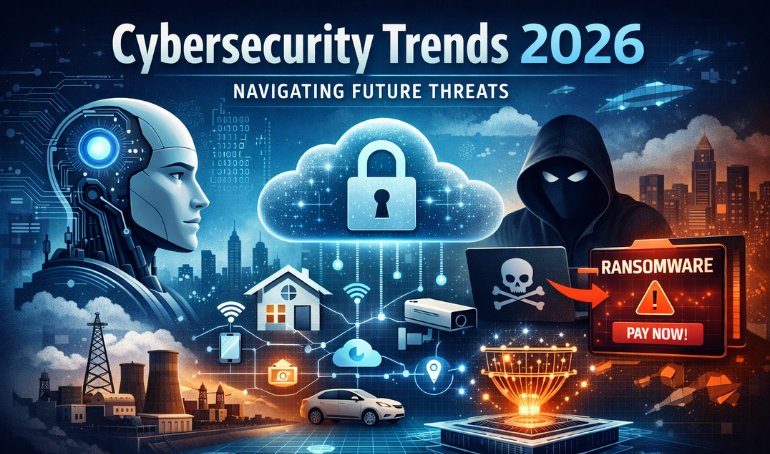
Cybersecurity Trends 2026: What You Need to Know
Cybercrime has become a serious problem worldwide. Experts believe it could cost the global economy more than ten trillion dollars every year by 2025. That number alone shows why cybersecurity matters today. It is no longer just an IT issue. It affects businesses, governments, and everyday people who rely on digital systems for work and daily life.
As we move toward 2026, technology continues to grow at a fast pace. More companies are using cloud services, more devices are connected to the internet, and artificial intelligence is becoming part of many systems. At the same time, cyber attackers are becoming smarter and more organized. Understanding these changes helps people make better decisions and avoid costly mistakes.
The Role of Artificial Intelligence in Cybersecurity
Artificial intelligence is now widely used in cybersecurity. It helps organizations detect problems faster and respond before serious damage happens. AI systems can review large amounts of data, such as network activity and login behavior, and notice patterns that look unusual. This makes it easier to spot threats early, sometimes even before an attack fully starts.
AI also helps security teams respond quickly when something goes wrong. For example, if a system detects suspicious behavior, it can block access or isolate affected devices right away. This reduces downtime and limits how far an attack can spread. AI is also improving login security by analyzing how users normally behave, which adds protection without making things harder for people.
However, attackers also use AI. In 2026, fake emails, messages, and phone calls are expected to look more real than ever. Some scams may even include fake voices or videos that appear to come from trusted people. Because of this, technology alone is not enough. Awareness and careful judgment are still very important.
Internet of Things and Security Risks
The Internet of Things includes devices like smart cameras, sensors, medical equipment, and connected machines. These devices are helpful, but many of them are not built with strong security. Often, they use simple passwords, old software, or weak protection, which makes them easy targets for attackers.
As more devices are connected, the risk increases. One weak device can give attackers a way into an entire network. By 2026, organizations are expected to pay more attention to how these devices are managed. Separating them from important systems and watching their activity closely can help reduce damage if a device is compromised.
Cloud Security in 2026
Cloud services have become a core part of modern business. Companies store data, run applications, and manage operations in the cloud. This makes cloud security more important than ever. Many security problems in the cloud happen not because the platform is unsafe, but because systems are set up incorrectly.
In 2026, more businesses will focus on checking every user and device before allowing access. This approach, often called Zero Trust, assumes that no one should be trusted automatically. Continuous monitoring will also play a key role by finding weak settings or unusual behavior before attackers can take advantage of them.
Cyber Threats Are Becoming More Complex
Ransomware continues to be one of the biggest cyber threats. Instead of just locking files, attackers now often steal data and threaten to share it publicly. This puts extra pressure on victims and increases the damage caused by attacks. Some attackers even sell ransomware tools to others, making these attacks more common.
Supply chain attacks are also increasing. In these cases, attackers target a software or service provider to reach many companies at once. Other attackers may stay hidden in a system for a long time, quietly collecting information. Identity attacks, such as stealing passwords through fake emails, remain one of the easiest ways for attackers to break in.
New Technologies and Future Risks
New technologies bring new security challenges. Quantum computing may one day break current encryption methods, so organizations are starting to prepare new ways to protect data. Blockchain technology can improve security in some areas, but it also needs protection. Virtual and augmented reality platforms raise concerns about privacy and fraud as they become more common.
Thinking ahead and planning for these changes will help reduce future risks.
Preparing for Cybersecurity in 2026
Preparing for cybersecurity services in 2026 does not require perfection. It requires awareness, planning, and regular improvement. Strong login protection, data encryption, secure cloud setups, and employee training all play important roles. When people understand common threats and know how to respond, the impact of attacks can be reduced.
Cybersecurity works best when technology and human behavior support each other. Staying informed and flexible makes it easier to adapt as threats change.
Conclusion
Cybersecurity in 2026 will be more challenging, but it is manageable with the right approach. The biggest risks come from ignoring changes or relying on outdated practices. By understanding trends, using modern security tools, and educating people, organizations and individuals can protect themselves more effectively.
Security is not about being perfect. It is about being prepared, responsive, and willing to improve as the digital world evolves.
Cybersecurity doesn’t have to be confusing or overwhelming. If you’d like clear guidance and practical support, Agency1987 is here to help. Reach out to us and let’s talk about what makes sense for your business.